
Saturday, 19 September 2026
Friday, 18 September 2026
Thursday, 17 September 2026
Tuesday, 15 September 2026
Monday, 14 September 2026
Sunday, 13 September 2026
Monday, 10 August 2026
Wednesday, 17 June 2026
Sunday, 14 June 2026
Friday, 12 June 2026
Thursday, 11 June 2026
Sunday, 07 June 2026
Friday, 05 June 2026
Thursday, 04 June 2026
Wednesday, 03 June 2026
Tuesday, 02 June 2026
Monday, 01 June 2026
Sunday, 31 May 2026
Saturday, 30 May 2026
Friday, 29 May 2026
Tuesday, 26 May 2026
Wednesday, 06 May 2026
Monday, 27 April 2026
Sunday, 26 April 2026
Saturday, 25 April 2026
Thursday, 23 April 2026
Saturday, 18 April 2026
Friday, 03 April 2026
Saturday, 07 March 2026
Sunday, 22 February 2026
Monday, 28 December 2025
Sunday, 11 October 2025
Sunday, 27 September 2025
Saturday, 19 September 2025
Monday, 07 September 2025
Sunday, 23 August 2025
Sunday, 07 June 2025
Sunday, 24 May 2025
Saturday, 23 May 2025
Friday, 17 April 2025
Sunday, 12 April 2025
Monday, 23 March 2025
Sunday, 08 March 2025
Tuesday, 24 February 2025
Saturday, 21 February 2025
Saturday, 07 February 2025
Friday, 06 February 2025
Wednesday, 04 February 2025
Sunday, 25 January 2025
Thursday, 17 December 2024
Monday, 07 December 2024
Saturday, 05 December 2024
Tuesday, 01 December 2024
Thursday, 12 November 2024
Monday, 02 November 2024
Saturday, 17 October 2024
Tuesday, 29 September 2024
Sunday, 27 September 2024
Saturday, 26 September 2024
Tuesday, 08 September 2024
Monday, 07 September 2024
Thursday, 03 September 2024
Wednesday, 02 September 2024
Tuesday, 01 September 2024
Monday, 31 August 2024
Saturday, 29 August 2024
Monday, 24 August 2024
Saturday, 22 August 2024
Tuesday, 18 August 2024
Saturday, 15 August 2024
Tuesday, 11 August 2024
Sunday, 09 August 2024
Saturday, 08 August 2024
Thursday, 06 August 2024
Tuesday, 04 August 2024
Friday, 31 July 2024
Tuesday, 28 July 2024
Saturday, 25 July 2024
Thursday, 23 July 2024
Saturday, 18 July 2024
Monday, 22 June 2024
Wednesday, 10 June 2024
Sunday, 07 June 2024
Saturday, 06 June 2024
Wednesday, 03 June 2024
Sunday, 24 May 2024
Tuesday, 19 May 2024
Monday, 18 May 2024
Sunday, 17 May 2024
Friday, 08 May 2024
Sunday, 03 May 2024
Wednesday, 29 April 2024
Monday, 20 April 2024
Friday, 10 April 2024
Monday, 09 March 2024
Monday, 02 March 2024
Sunday, 01 March 2024
Sunday, 22 February 2024
Tuesday, 10 February 2024
Sunday, 08 February 2024
Tuesday, 20 January 2024
Wednesday, 23 December 2023
Tuesday, 22 December 2023
Monday, 21 December 2023
Sunday, 20 December 2023
Tuesday, 01 December 2023
Friday, 27 November 2023
Sunday, 22 November 2023
Tuesday, 17 November 2023
Tuesday, 03 November 2023
Saturday, 31 October 2023
Monday, 26 October 2023
Monday, 19 October 2023
Sunday, 04 October 2023
Sunday, 27 September 2023
Tuesday, 22 September 2023
Monday, 21 September 2023
Thursday, 17 September 2023
Tuesday, 15 September 2023
Thursday, 20 August 2023
Tuesday, 18 August 2023
Monday, 27 July 2023
Friday, 24 July 2023
Wednesday, 24 June 2023
Thursday, 04 June 2023
Monday, 01 June 2023
Sunday, 31 May 2023
Friday, 29 May 2023
Wednesday, 20 May 2023
Tuesday, 19 May 2023
Monday, 18 May 2023
Sunday, 17 May 2023
Saturday, 16 May 2023
Friday, 15 May 2023
Thursday, 14 May 2023
Tuesday, 12 May 2023
Monday, 11 May 2023
Saturday, 09 May 2023
Friday, 08 May 2023
Monday, 04 May 2023
Saturday, 02 May 2023
Monday, 27 April 2023
Sunday, 19 April 2023
Tuesday, 14 April 2023
Sunday, 05 April 2023
Tuesday, 24 March 2023
Wednesday, 18 March 2023
Tuesday, 17 March 2023
Saturday, 14 March 2023
Friday, 13 March 2023
Saturday, 07 March 2023
Sunday, 01 March 2023
Monday, 23 February 2023
Sunday, 22 February 2023
Saturday, 21 February 2023
Wednesday, 18 February 2023
Tuesday, 17 February 2023
Monday, 16 February 2023
Saturday, 14 February 2023
Friday, 13 February 2023
Thursday, 12 February 2023
Tuesday, 10 February 2023
Sunday, 08 February 2023
Saturday, 07 February 2023
Friday, 06 February 2023
Wednesday, 04 February 2023
Saturday, 31 January 2023
Thursday, 29 January 2023
Friday, 23 January 2023
Thursday, 22 January 2023
Wednesday, 21 January 2023
Tuesday, 20 January 2023
Sunday, 18 January 2023
Saturday, 17 January 2023
Friday, 16 January 2023
Tuesday, 13 January 2023
Sunday, 11 January 2023
Sunday, 04 January 2023
Monday, 21 December 2022
Sunday, 20 December 2022
Saturday, 19 December 2022
Tuesday, 15 December 2022
Saturday, 12 December 2022
Monday, 07 December 2022
Sunday, 29 November 2022
Saturday, 21 November 2022
Monday, 16 November 2022
Wednesday, 11 November 2022
Sunday, 08 November 2022
Sunday, 18 October 2022
Monday, 12 October 2022
Sunday, 11 October 2022
Tuesday, 06 October 2022
Saturday, 03 October 2022
Saturday, 26 September 2022
Monday, 21 September 2022
Monday, 14 September 2022
Tuesday, 08 September 2022
Sunday, 30 August 2022
Wednesday, 26 August 2022
Monday, 24 August 2022
Tuesday, 18 August 2022
Monday, 27 July 2022
Wednesday, 22 July 2022
Saturday, 18 July 2022
Tuesday, 14 July 2022
Saturday, 11 July 2022
Wednesday, 24 June 2022
Tuesday, 16 June 2022
Wednesday, 10 June 2022
Thursday, 04 June 2022
Tuesday, 02 June 2022
Monday, 01 June 2022
Sunday, 31 May 2022
Saturday, 30 May 2022
Sunday, 24 May 2022
Sunday, 17 May 2022
Thursday, 14 May 2022
Tuesday, 12 May 2022
Monday, 04 May 2022
Tuesday, 28 April 2022
Sunday, 19 April 2022
Saturday, 18 April 2022
Friday, 17 April 2022
Wednesday, 15 April 2022
Monday, 13 April 2022
Saturday, 11 April 2022
Wednesday, 08 April 2022
Monday, 06 April 2022
Wednesday, 01 April 2022
Tuesday, 31 March 2022
Saturday, 28 March 2022
Thursday, 26 March 2022
Tuesday, 24 March 2022
Wednesday, 18 March 2022
Tuesday, 17 March 2022
Tuesday, 10 March 2022
Saturday, 07 March 2022
Wednesday, 04 March 2022
Tuesday, 03 March 2022
Wednesday, 18 February 2022
Monday, 16 February 2022
Saturday, 14 February 2022
Wednesday, 11 February 2022
Tuesday, 03 February 2022
Sunday, 01 February 2022
Wednesday, 28 January 2022
Sunday, 25 January 2022
Saturday, 24 January 2022
Wednesday, 21 January 2022
Tuesday, 20 January 2022
Monday, 19 January 2022
Saturday, 17 January 2022
Tuesday, 13 January 2022
Monday, 12 January 2022
Saturday, 10 January 2022
Wednesday, 07 January 2022
Saturday, 03 January 2022
Wednesday, 23 December 2021
Monday, 21 December 2021
Tuesday, 15 December 2021
Monday, 14 December 2021
Monday, 07 December 2021
Thursday, 03 December 2021
Wednesday, 02 December 2021
Sunday, 29 November 2021
Thursday, 26 November 2021
Wednesday, 25 November 2021
Tuesday, 24 November 2021
Monday, 23 November 2021
Sunday, 22 November 2021
Wednesday, 18 November 2021
Monday, 16 November 2021
Saturday, 14 November 2021
Monday, 09 November 2021
Tuesday, 27 October 2021
Wednesday, 21 October 2021
Monday, 19 October 2021
Sunday, 18 October 2021
Monday, 12 October 2021
Sunday, 27 September 2021
Monday, 21 September 2021
Sunday, 20 September 2021
Saturday, 19 September 2021
Thursday, 10 September 2021
Monday, 07 September 2021
Sunday, 06 September 2021
Thursday, 03 September 2021
Wednesday, 02 September 2021
Sunday, 23 August 2021
Monday, 17 August 2021
Sunday, 16 August 2021
Monday, 10 August 2021
Sunday, 02 August 2021
Tuesday, 28 July 2021
Monday, 27 July 2021
Thursday, 23 July 2021
Monday, 20 July 2021
Sunday, 19 July 2021
Sunday, 05 July 2021
Sunday, 28 June 2021
Wednesday, 24 June 2021
Tuesday, 23 June 2021
Monday, 15 June 2021
Sunday, 14 June 2021
Tuesday, 09 June 2021
Monday, 08 June 2021
Sunday, 07 June 2021
Wednesday, 03 June 2021
Wednesday, 27 May 2021
Monday, 25 May 2021
Thursday, 21 May 2021
Wednesday, 20 May 2021
Sunday, 17 May 2021
Sunday, 10 May 2021
Tuesday, 05 May 2021
Sunday, 03 May 2021
Tuesday, 28 April 2021
Monday, 27 April 2021
Wednesday, 15 April 2021
Tuesday, 31 March 2021
Tuesday, 24 March 2021
Monday, 23 March 2021
Thursday, 19 March 2021
Monday, 16 March 2021
Thursday, 05 March 2021
Wednesday, 04 March 2021
Tuesday, 03 March 2021
Monday, 23 February 2021
Friday, 20 February 2021
Thursday, 19 February 2021
Wednesday, 18 February 2021
Friday, 13 February 2021
Wednesday, 11 February 2021
Tuesday, 10 February 2021
Tuesday, 05 May 2020
Sunday, 15 March 2020
Saturday, 14 March 2020
Thursday, 12 February 2020
Friday, 23 January 2020
Friday, 16 January 2020
Thursday, 15 January 2020
Wednesday, 14 January 2020
Thursday, 17 December 2019
Wednesday, 04 February 2016
News Blog
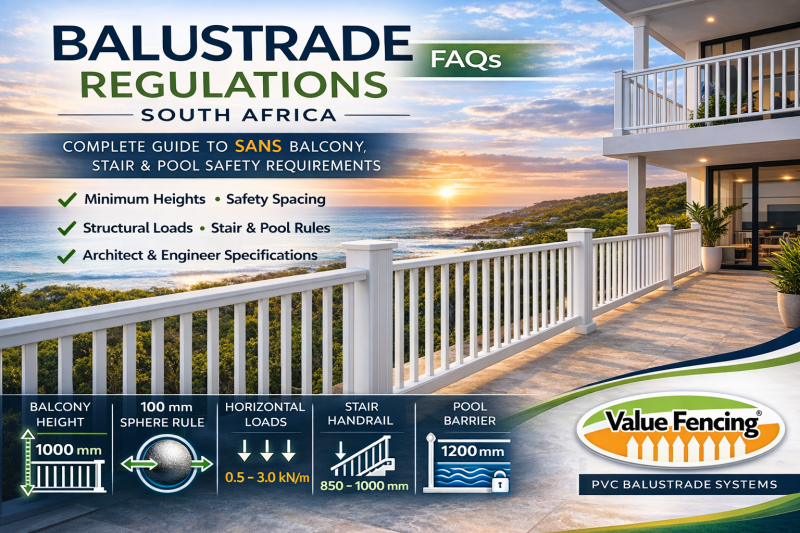
Balustrade Regulations South Africa | Balcony & Pool Safety Guide
Balustrade Regulations South Africa | Balcony & Pool Safety Guide
Author: Willie Labuschagne - MD - Value Fencing®
Date: 2026-03-07
Date: 2026-03-07
Balustrade Regulations South Africa
Frequently Asked Questions (Complete Safety Guide)
Balustrades and safety barriers are essential for protecting people from falling from elevated areas such as balconies, staircases, decks and swimming pools. South African building regulations include several safety principles that architects, builders and property owners must follow when designing these barriers.
Below are answers to the most common questions regarding balustrade and pool safety regulations in South Africa.
What are balustrade regulations in South Africa?
Balustrade regulations are safety rules within the South African National Building Regulations that require protective barriers to be installed wherever a fall risk exists. These barriers are typically used on balconies, staircases, decks, walkways and raised platforms.
The regulations ensure that railings are high enough, strong enough and designed safely so that occupants cannot fall through or over the barrier.
Relevant standards generally fall under SANS 10400 and related structural and safety codes.
When is a balustrade required?
A balustrade is normally required whenever there is a change in floor level that could present a fall risk, particularly where the height difference exceeds approximately one metre.
Typical locations where balustrades are required include:
- Balconies
- Decks and verandas
- Staircases
- Mezzanine floors
- Walkways and bridges
- Raised patios
- Elevated platforms
These safety barriers help prevent accidental falls and improve overall building safety.
What is the minimum height for balcony railings in South Africa?
Most residential balconies require a minimum guardrail height of approximately 1000 mm, measured from the finished floor level to the top of the railing.
This height helps prevent occupants from accidentally leaning or falling over the edge while still allowing clear views from the balcony.
In some public seating areas a slightly lower height may be permitted, but most residential balcony railings follow the 1000 mm rule.
What is the 100 mm rule for balustrades?
The 100 mm rule is a child safety requirement that limits the size of openings within a balustrade.
It means that no gap in the railing may allow a sphere with a diameter of 100 mm to pass through.
This rule applies to:
- Vertical balusters
- Decorative infill panels
- Stair railings
- Deck guardrails
- Pool barriers
The purpose of this rule is to prevent young children from slipping through railings.
How strong must balustrades be?
Balustrades must be able to resist horizontal forces from people leaning or pushing against them.
Typical structural design loads include:
Residential applications
Approximately 0.5 kN per metre
Public access areas
Approximately 1.5 kN per metre
Crowded public environments
Up to 3.0 kN per metre
Structural engineers normally design the railing system to safely resist a 30kg sand bag swung from 1,6m away.
Do staircases need handrails?
Yes. Most staircases require handrails to provide support and fall protection.
Typical stair handrail requirements include:
Height above stair pitch line
Approximately 850 mm to 1000 mm
Handrails should:
- Run continuously along the stair flight
- Extend slightly beyond the top and bottom step
- Maintain safe clearance from adjacent walls
These requirements improve accessibility and safety for stair users.
What are the safety rules for glass balustrades?
Glass balustrades must use safety glazing materials that reduce the risk of dangerous breakage.
Typical requirements include:
- Toughened safety glass
- Laminated safety glass
- Manufacturer safety markings
- Proper structural fixing systems
These measures ensure that glass panels remain secure and resistant to impact.
What are the pool barrier regulations in South Africa?
Swimming pools must be protected by a safety barrier designed to prevent unsupervised access, especially by children.
Typical pool barrier safety rules include:
Minimum barrier height
1200 mm
The barrier must prevent a 100 mm sphere from passing through openings.
How must a pool gate operate?
Pool gates must follow strict safety requirements.
A compliant pool gate should:
- Open outwards, away from the pool area
- Be self-closing
- Be fitted with a self-latching mechanism
- Have a lockable latch positioned at least 1.5 metres above ground level
These requirements help ensure that small children cannot easily access the pool area.
Are pool nets or covers sufficient protection?
No.
Pool nets or pool covers are not considered sufficient safety barriers on their own.
A compliant swimming pool must still have a physical safety barrier or fence that restricts unsupervised access.
Safety barriers remain the primary protection against accidental drowning.
Can PVC balustrades comply with building regulations?
Yes.
PVC balustrade systems can comply with safety principles when they are properly designed and installed.
PVC systems are commonly used because they offer:
- Corrosion resistance
- Low maintenance requirements
- Consistent baluster spacing
- Long service life
These advantages make PVC balustrades particularly suitable for coastal environments where steel railings may rust.
Why are PVC balustrades becoming more popular?
PVC balustrades are increasingly used in residential estates, coastal developments and modern homes because they combine durability with low maintenance.
Key benefits include:
- Rust free construction
- Minimal maintenance
- Long lifespan
- Clean architectural appearance
- Suitable for coastal climates
Because PVC does not corrode like steel, it can provide a long-lasting alternative for balconies, staircases and pool barriers.
Who should install balustrades?
- Balustrades should be installed by experienced contractors who understand the relevant building regulations and structural requirements.
- Proper installation ensures that the railing system is securely fixed, correctly spaced and compliant with safety principles.
- Professional installation also helps maintain the long-term performance of the balustrade system.
Where are balustrades most commonly used?
Balustrades are commonly installed in both residential and commercial buildings.
Typical applications include:
- Balconies
- Decks
- Staircases
- Pool areas
- Walkways
- Terraces
- Mezzanine floors